

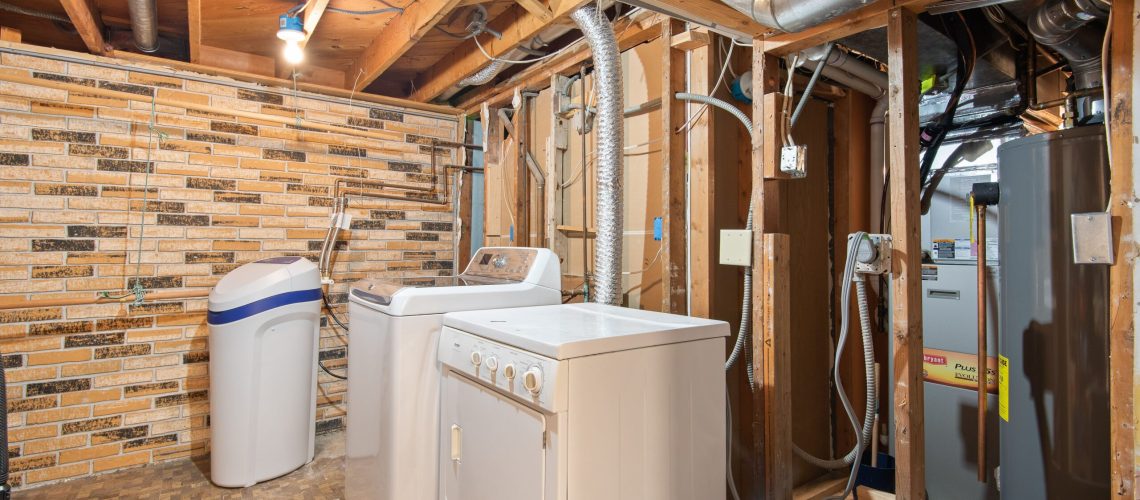

A tank water heater is usually the better fit if you want the lower upfront cost and a simple swap. A tankless water heater is usually the better fit if you plan to stay in your home a long time, have limited space, or run a lot of hot water. Tankless costs more to install but lasts longer and only heats water when you use it. Tank costs less to install, takes up more room, and keeps a full tank hot around the clock.
Neither one is the “right” answer for everyone. It comes down to your household, your house, and how long you’ll be in it. Here’s how to sort it out.
What is the difference between a tank and a tankless water heater?
A tank water heater is the one most people grew up with: a big insulated cylinder, usually 40 to 50 gallons, that heats water and keeps it ready. When you open a tap, hot water comes out of the top of the tank and cold water refills the bottom. If you’ve ever taken a long shower and had the water run cold, you used up the tank.
A tankless water heater has no storage. When you turn on a hot tap, water flows through the unit and gets heated on the spot by a gas burner or electric element. As long as the unit can keep up with the demand, the hot water doesn’t run out.
That one difference, storing hot water versus heating it on demand, explains almost everything else about how the two compare.
How does a tankless water heater work?
When you open a hot water tap, a flow sensor in the unit detects the water moving and switches the heat source on. Water passes through a heat exchanger, comes out hot, and goes to the tap. When you close the tap, the unit shuts off.
Two things follow from that:
- It never runs out, but it can fall behind. Every tankless unit has a maximum flow rate. If you run the shower, the dishwasher, and a laundry cycle at once, a unit that’s too small for your house can struggle to keep all of them hot.
- There’s a short wait. Hot water doesn’t appear instantly. There’s a brief delay while the unit fires up and the water travels through the pipes, and it can feel a bit longer than with a tank, depending on how far the unit is from the tap.
Tank vs. tankless at a glance
| Tank | Tankless | |
|---|---|---|
| Upfront installed cost | Lower | Higher |
| Typical lifespan | Around 8 to 12 years | Often 15 to 20 years |
| Hot water supply | Limited to tank size, then recovery time | Continuous, up to the unit’s flow limit |
| Space needed | Large footprint | Compact, usually wall-mounted |
| Energy use | Keeps water hot all day | Heats only when needed |
| Installation complexity | Usually a straightforward swap | Often needs gas line, venting, or electrical upgrades |
| Repairs | Simpler, parts widely available | More specialized, often needs a plumber familiar with the model |
| Maintenance | Periodic flushing | Periodic descaling, especially with hard water |
Which one costs more?
Tankless costs more up front, and the installation is a bigger part of that than the unit itself. A tankless system needs a lot of gas (or a lot of amperage on electric models) delivered all at once, which often means upgrading the gas line, adding or changing the venting, or adding electrical capacity. A tank swap, if you’re replacing like with like, rarely needs any of that.
The other side of the ledger is what you get for it. A tankless unit tends to last longer, and it doesn’t spend energy keeping a full tank warm while you’re at work or asleep. Whether that evens out depends on how long you stay in the home and how much hot water you actually use.
We break down the numbers in [LINK TO WATER HEATER INSTALLATION COST POST], including where the price differences actually come from.
Which lasts longer?
Tankless, generally. A tank water heater often lasts somewhere around 8 to 12 years. A tankless unit can run 15 to 20 years with decent maintenance, and parts of it can be replaced rather than the whole unit.
Water quality plays into both. In areas with hard water, minerals build up inside whichever type you have. Tank units collect sediment at the bottom, which shortens their life and makes them less efficient. Tankless units scale up inside the heat exchanger, which is why they need periodic descaling to keep running well. Neither type is immune, so don’t skip the maintenance either way.
Is a tankless water heater really more efficient?
For many households, yes, because it isn’t maintaining a tank of hot water that mostly sits unused. That’s most noticeable in smaller households or homes where hot water use is spread out.
The gain shrinks for households that use a huge amount of hot water all day. And tankless efficiency depends on the unit, the fuel, and how it’s set up, so “more efficient” isn’t automatic. If energy savings is the main reason you’re considering tankless, ask for the efficiency ratings on the specific models you’re comparing rather than going by the category.
How much space do they take up?
This one is easy to overlook until you’re standing in the garage with a tape measure. A tank water heater is a large cylinder that needs floor space and clearance around it. A tankless unit is roughly the size of a small suitcase and mounts on the wall.
If the water heater lives in a tight closet, a small utility room, or a spot where you’d like the floor back, tankless can solve a real problem. If you have plenty of room and the current spot works, space probably isn’t a deciding factor.
What about running out of hot water?
This is the question most people actually care about.
With a tank, you have a fixed supply. A 40 or 50-gallon tank can handle a household’s morning routine, but back-to-back showers plus laundry can drain it, and then you wait for it to recover. Bigger tanks help, at the cost of more space and more energy to keep them hot.
With a tankless, the supply is effectively unlimited, but it’s capped by how much water the unit can heat per minute. A properly sized unit handles a normal household without trouble. An undersized one is the source of most tankless complaints, so sizing matters more than people expect.
A quick way to think about it: tank limits you on how long, tankless limits you on how much at once.
Which type is better for your situation?
Instead of a checklist, here are a few common situations and where each one tends to land.
A family of five with a busy morning rush
Several showers, a dishwasher, and laundry all competing for hot water. Either type can work, but this is where sizing counts. A tank that’s too small runs out mid-routine. A tankless that’s too small can’t keep up with simultaneous demand. Whichever you choose, size it for your peak usage, not your average day.
A couple or a single person in a smaller home
Hot water use is lighter and more predictable. A tankless unit can save energy here because there’s no tank sitting hot all day, and the smaller footprint helps in a smaller home. A standard tank is also a perfectly reasonable choice if the lower upfront cost matters more.
A homeowner planning to sell in a couple of years
Tank is usually the more practical pick. The higher installation cost of tankless takes time to pay back, and you may not be there long enough to get that back.
A homeowner staying for the long haul
Tankless starts to make more sense. The higher upfront cost spreads over a longer lifespan, and the space and efficiency benefits add up over the years.
A home where the water heater is in an awkward spot
If it’s in a cramped closet, an attic, or somewhere access is tight, the installation difficulty can swing the decision either way. Tankless is easier to fit in small spaces, but it may need venting and gas line work that’s harder in the same cramped spot. This is a case where having someone look at the actual space matters more than any general rule.
Can you switch from tank to tankless?
Yes, but it’s not a like-for-like swap. Going from a tank to tankless usually involves:
- Checking the gas line size. Tankless needs a high volume of gas, and many homes’ existing lines were sized for a tank.
- Updating the venting. Tankless units often need different venting than a tank, and it has to meet code.
- Possibly relocating the unit. Because it’s wall-mounted, it may move from where the tank was.
- Electrical work for the ignition and controls, even on gas models.
- Permits, which are typically required for a water heater swap of this type.
That’s why switching costs more than simply replacing a tank with another tank. It’s not that the unit is overpriced. It’s that the house usually needs to be adapted to it.
What maintenance does each type need?
Both need some attention, and skipping it shortens their lives.
Tank water heaters benefit from being flushed periodically to clear sediment from the bottom, and the anode rod inside, which protects the tank from corrosion, wears out over time and is worth checking.
Tankless water heaters need descaling, especially in hard water areas, since mineral buildup in the heat exchanger reduces efficiency and can cause problems. Many manufacturers recommend a yearly service, and it’s worth following their guidance to keep the warranty valid.
Should you hire a plumber for the install?
For either type, yes. Water heaters involve gas, venting, water, and in some cases electrical connections all at once, and an installation mistake isn’t just a leak risk. Improper venting on a gas unit can create a carbon monoxide hazard. Most manufacturer warranties also expect professional installation, so doing it yourself can cost you coverage on the unit.
So which one should you pick?
Pick a tank if you want the lowest upfront cost, you’re replacing an existing tank in the same spot, or you may not be in the home long.
Pick a tankless if you plan to stay, want to free up floor space, or want a unit that lasts longer and doesn’t keep water hot all day.
If you’re still on the fence, the most useful next step is having someone look at your actual setup: where the unit is, what your gas line and venting look like, and how much hot water your household really uses. That’s what turns a general comparison into a real answer.
If you’re in the Thousand Oaks area and weighing tank versus tankless, CRC Plumbing handles water heater installation and can walk you through what makes sense for your home.